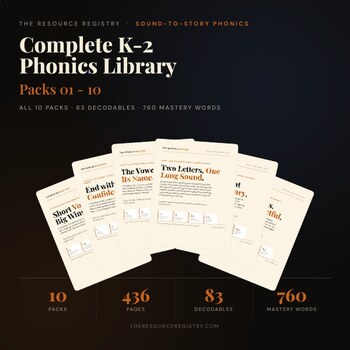
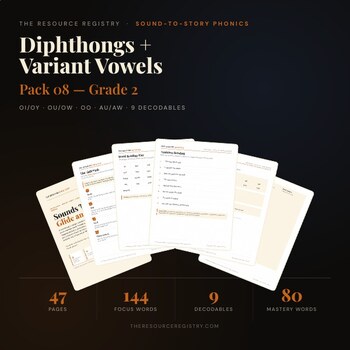
Phonics packs, decodable readers, and word-part practice. Start with what your students have been taught, then choose material that lets them apply it.
Choose foundational patterns, longer-word decoding, or morphology. Teachers using UFLI can explore the dedicated companion guide.
One pack, a bundle, or a sample?
Choose an individual pack for one teaching need. Choose a bundle when you need several of its included packs. Start with a free sample to check the student task and level before buying. Bundles may overlap with individual purchases.
PART 01 · K–1
Short vowels & early patterns
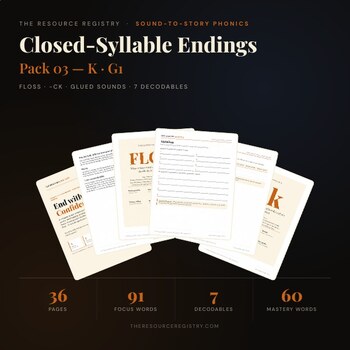
CVC reading, consonant digraphs, and closed-syllable endings.
Check the scope against the patterns your students already know.
For the teacher
Match the pack’s patterns to your teaching sequence.
For the student
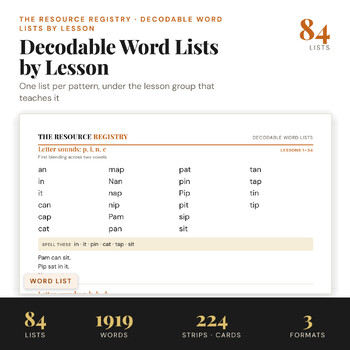
Practice the target sound–spelling patterns and apply them in reading.
Why use it
Keeps practice connected to what has already been taught.
Product previews, exact included files, licenses, and current prices are on the individual TpT listings. Classroom uses above are suggestions, not guaranteed learning outcomes.
A short route from pattern to passage.
Use this as a planning routine, alongside your own phonics scope and sequence.
1
Teach explicitly
Introduce the sound–spelling relationship and model how to blend it.
2
Practice in words
Read and spell words with the taught pattern; respond to errors directly.
3
Apply in text
Read a matched decodable passage and check both word reading and meaning.
Try the materials. Then decide.
Start with a real sample from this collection. Look at the student task, teacher directions, and fit for your group.
Compare its sound–spelling patterns and irregular words with what the student has already learned. Use the product preview or sample to judge that match.
Are all phonics materials for younger children?
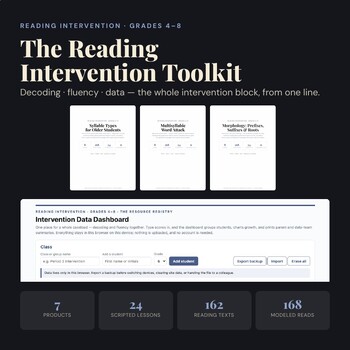
No. There are K–2 foundational packs, Big Kid Decodables for Grade 2–3 intervention, and a separate older-student decoding line for Grades 4–8.
Do I need to use UFLI?
Only the UFLI companion resources are organized around that program’s lesson sequence. The other phonics and morphology collections can be considered alongside your own teaching plan.
Where should morphology fit?
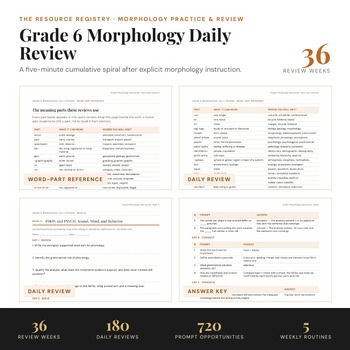
Morphology focuses on meaningful word parts. Choose it based on the vocabulary and word-reading needs you are teaching, alongside—not as a substitute for—needed sound–spelling instruction.
Where do I download the materials?
Product links open the matching Teachers Pay Teachers listing. Check its preview, included files, license, and current price there. Free samples are labeled separately from paid packs.
These are independently authored teaching resources. UFLI companions are supplementary materials for teachers using that program, not official UFLI products.