The companions that save the prep if your class uses UFLI Foundations
A scripted phonics program tells you exactly what to teach. It doesn't print the student notebook, the decodable, or the mastery check. That part still lands on your desk.
If your school adopted UFLI Foundations, you already know its best quality: it takes the guesswork out of the sequence. You open the lesson, and you know precisely which sound, which words, which routine come next. For a lot of teachers — especially anyone who inherited "teach phonics" with no map — that's a genuine relief.
Here's the reality, though. A scripted scope and sequence tells you what to teach. It doesn't hand you the pile of student-facing materials that make the lesson actually run: a notebook page for every lesson, a decodable the kids can read at that exact point in the sequence, the word list for your table work, the quick check to see who's got it. That part is still a printing-and-prep job — and it repeats every single day.
The program removes the "what do I teach?" problem. It doesn't remove the "what do I put in front of the kid?" problem. That second one is the one that eats your evenings.
Match the materials to the lesson, not the week
The trap with a fast-moving sequence is grabbing generic phonics worksheets that are "close enough." They're not. If today's lesson is a specific sound-spelling and the worksheet quietly includes patterns three lessons ahead, the student has to guess — which is the exact habit structured phonics exists to kill. Companion materials only help if they're pegged to the same lesson number the program is on.
That's the whole idea behind a good companion set: everything is organized by lesson, in the same order, so on lesson 37 you pull the lesson-37 notebook page and the lesson-37 decodable, and every word in both is decodable at lesson 37. No sneaking ahead. No prep-time triage.
The four things worth having ready
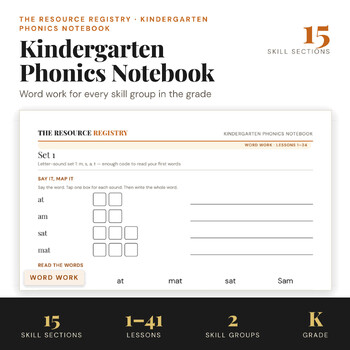
A student phonics notebook. One consolidated page per lesson so students aren't juggling loose worksheets — they build a record they (and you, and families) can flip back through.
Decodable passages with audio. Connected text at the current point in the sequence is where the skill becomes reading. Audio matters more than people expect: it lets a struggling reader hear the passage read correctly and reread without needing you at their elbow.
Decodable word lists by lesson. For blending drills, table work, and fluency, you want the exact words that are legal at this lesson — not a generic word bank.
Quick mastery checks. A fast, low-stakes check tells you who's ready to move and who needs another rep, before the sequence carries them past a gap.
What we built (and what's free to try)
I built a set of print-and-go companions for classrooms using UFLI Foundations, organized lesson by lesson to match the order you're already teaching in: phonics notebooks, decodable passages with audio, decodable word lists, a sound wall, and mastery checks. The idea is simple — keep the program's sequence, delete the nightly prep.
Several pieces are free so you can see whether they fit your room before spending anything: a free Kindergarten phonics notebook, free decodables with audio, a free sound wall, and free mastery checks. Print one for tomorrow's lesson and see how it lands.
The bottom line
A strong sequence is worth adopting — it solves a real problem. Just don't let the daily materials it doesn't include quietly become your second job. Match the student-facing pieces to the exact lesson you're on, keep them ready in order, and the program can do what it's good at while you get your evenings back.
These are independent companion resources created by The Resource Registry for teachers who use UFLI Foundations. They are not affiliated with, authorized by, or endorsed by the University of Florida Literacy Institute, and "UFLI Foundations" is the trademark of its owner. All notebooks, passages, and word lists are original content.