Survival stories that get reluctant readers to finish (Grades 4–8)
A student who 'hates reading' will read a whole page about a climber trapped under a boulder. The problem was never reading. It was the passage.
Watch a reluctant reader in a comprehension block and you'll see the same thing every time: they read the first two sentences, their eyes drift, and they're gone. It's easy to read that as a skills problem. Usually it's a stakes problem. The passage is about the water cycle or a boy who lost his mittens, and there is nothing at risk, so there's no reason to keep going.
Now hand the same student a passage about a hiker who had to make an impossible choice to get out of a canyon alive. Watch what happens. They finish it — and then they want to talk about it. Survival stories aren't a gimmick; they're a way to get a genuinely hard skill (close reading) to happen at all.
Why survival stories work on hard-to-reach readers
The stakes are obvious. Life or death is the one plot every reader is wired to care about. A student who won't push through a dull paragraph will push through a hard one when they need to know if the person makes it.
They're true. "This actually happened" changes everything for a skeptical reader. It's not a story someone made up to teach them a lesson — it's a real person who really survived, which makes the details worth paying attention to.
They invite rereading. When a reader cares about the outcome, going back to find the detail they missed stops feeling like a worksheet task and starts feeling like solving something. That's close reading — happening for a real reason.
You can't teach comprehension to a student who won't finish the passage. Get them to the last sentence first. High-interest text is how you do that.
Keep the text high, the reading level reachable
The trap with reluctant readers is thinking high-interest means easy. It doesn't. A fourth grader reading two years below grade level still wants a story that respects them — they just need it written so they can actually get through it. That's the hi-lo idea: high interest, lower readability, no babyish tone. The content is gripping; the sentences are reachable.
This is also how you run one topic across a mixed-ability group. Same survival story, leveled so the whole class can read and discuss it together — which is worth far more than five kids on five different photocopies.
Turn the story into comprehension work
The story gets them reading; the questions build the skill. Good questions on a survival passage aren't "what color was the tent." They're "what did the climber decide, and what in the text tells you why?" — text-evidence and inference questions that force a reader back into the passage. Because the reader cares about the answer, they actually go back and look.
Where our Survival Stories come in
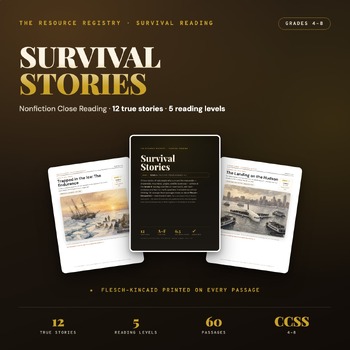
I built our Survival Stories passages for exactly this reader — true, high-stakes accounts written at a reachable level, each paired with text-evidence and inference questions. There are per-grade sets for 4th through 8th so the reading level matches the reader, not just the grade on the door. They're part of our full hi-lo reading passages library for Grades 3–8.
Want to see if it lands with your class before buying? There's a free sample passage. Drop it in front of the student who "hates reading" and watch whether they finish it.
The bottom line
Reluctant readers don't need easier text. They need text worth finishing. Give them a real story with real stakes, keep the reading level reachable, and ask questions that send them back into the passage — and the comprehension skills you've been trying to teach finally have somewhere to happen.