Kindergarten handwriting: a letter-formation routine that sticks
In kindergarten, a letter that looks fine but was drawn bottom-to-top is a problem. How it's formed matters more than how it looks — and it's the part that's hard to fix later.
Here's a thing that surprises new kindergarten teachers: a child can produce a perfectly acceptable-looking letter b and still have a handwriting problem. If they built it from the bottom, or drew the circle before the line, the letter looks right on the page and feels wrong in the hand. And the habit — the motor pattern — is what carries forward. Neatness you can grow into. Backwards formation you have to un-teach.
That's why kindergarten handwriting isn't really about neat letters. It's about grooving consistent, efficient formation habits before bad ones set. Do that well and fluent, legible writing follows almost on its own. Skip it and you're fighting the same reversals in second grade.
Teach the stroke, not just the shape
Every letter has a starting point and an order of strokes. Kids need to be told both, explicitly, and shown, every time — "start at the top, pull straight down, jump back to the top." Left to invent their own path, many five-year-olds draw letters in whatever order feels natural, which is often the hardest order to build fluency from.
Group letters by the motor pattern they share instead of teaching A-B-C order. All the letters that start with a big line down. All the ones built on a circle. Teaching by stroke family means each new letter reuses a movement the hand already knows.
Short, daily, and multisensory
Handwriting is a motor skill, and motor skills are built by frequent short reps, not occasional long ones. Five to ten minutes a day beats a thirty-minute Friday session. And in kindergarten, the hand learns faster when more than the hand is involved — trace it in the air, say the stroke out loud, form it big before forming it small.
Handwriting in kindergarten is a motor habit, not an art project. Get the formation automatic and legibility takes care of itself. Chase neatness first and you get careful, slow, and still-reversed.
Why automatic handwriting helps everything else
This isn't just about tidy papers. When forming a letter takes a child's full attention, there's nothing left over for spelling, sentence ideas, or what they actually want to say. Automatic handwriting frees up that mental space. The research on this is consistent: fluent handwriting supports better, longer writing — because the child isn't spending all their working memory on the letters.
A ready-made kindergarten routine
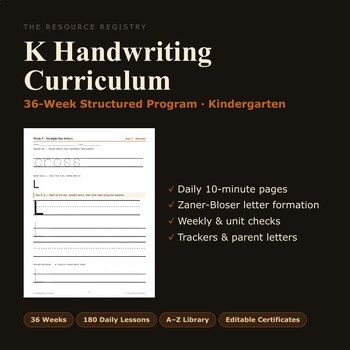
I built our Kindergarten Handwriting Curriculum around this — explicit starting points and stroke order, letters grouped by formation, and short daily practice pages that use the continuous, consistent letter formation many schools teach. It's a sequence you can open and follow, not a stack of worksheets to organize.
If you also want unlimited practice you can regenerate for any letter, word, or name, our free K–2 handwriting generator makes printable pages right in your browser — handy for the kid who needs ten more reps on just the letter s.
The bottom line
Don't judge kindergarten handwriting by how it looks. Judge it by how it's made. Teach starting points and stroke order explicitly, group letters by movement, and practice a little every day — and you'll build the automatic, correct formation that makes everything downstream, from spelling to writing whole sentences, dramatically easier.