Halloween close reading that isn't a coloring page (Grades 4–8)
Every October, upper-grade teachers face the same problem: the seasonal activities are all for little kids. Your 7th graders want in on the fun too — they just won't admit it.
Search "Halloween activity" in late October and you'll drown in adorable — pumpkin crafts, spider counting, ghost coloring. All of it aimed at the K–2 crowd. Meanwhile your 4th through 8th graders are watching the younger grades get the fun and quietly wondering where theirs is. They're too cool to ask. They still want it.
Here's the move that works: give them the season without the babyishness. Halloween is packed with genuinely interesting nonfiction — where jack-o'-lanterns actually came from, how trick-or-treating started, the real history under the costumes. That's high-interest text with a seasonal hook, which makes it perfect fuel for the close reading you're supposed to be doing anyway.
The seasonal week isn't a break from rigor. Used right, it's the week your reluctant readers do their best close reading all month — because for once the topic sold itself.
Why the seasonal hook earns its place
Buy-in is free. You don't have to sell Halloween. Students arrive already interested, which means the energy you'd normally spend getting them to start the passage goes straight into the actual work.
It's a real-vs-story lesson in disguise. Halloween is thick with myth and half-truth, which makes it a perfect place to practice separating what a source claims from what the evidence supports — the same skepticism skill that transfers to every text after October.
It respects them. Nonfiction about the history and folklore of the holiday treats a 7th grader like a 7th grader. That respect is exactly what makes them willing to engage with something "seasonal" at all.
Keep it high-interest and on grade
The trick with older students is the same as any hi-lo text: gripping content, reading level that actually matches the reader, no cutesy tone. A Halloween passage should read like something worth their time and come with questions that send them back into the text for evidence — not a word search with a bat on it. That's how a seasonal week produces real comprehension work instead of a throwaway.
Where our Halloween passages fit
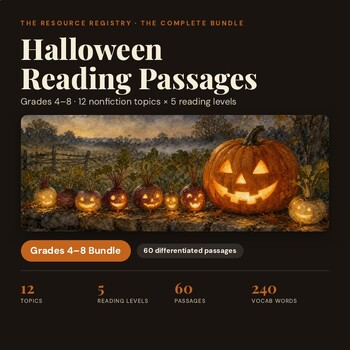
I built our Halloween reading passages for exactly this — high-interest nonfiction about the history and folklore of Halloween, written at a reachable level for Grades 4–8 and paired with text-evidence and inference questions. There are per-grade sets so the reading level matches the reader, plus a Grades 4–8 bundle if you teach across levels. They sit alongside the rest of our hi-lo reading library — Survival Stories, Ghost Stories, and unsolved mysteries — for when the season passes.
Want to test it on your class before October? Grab the free sample passage and see whether the kids who "hate reading" finish it.
The bottom line
Older students don't age out of wanting the seasonal fun — they age out of the seasonal fun being made for them. Hand them Halloween as real, high-interest nonfiction, keep the reading level honest, and ask questions that demand evidence. You get a room full of engaged readers and a close-reading lesson they'll actually remember — all from the week that usually gets wasted on a word search.