Teaching ocean habitats: a no-prep interactive lesson for K–5
Kids are fascinated by the ocean. The hard part is teaching it well without a week of prep and a pile of logins.
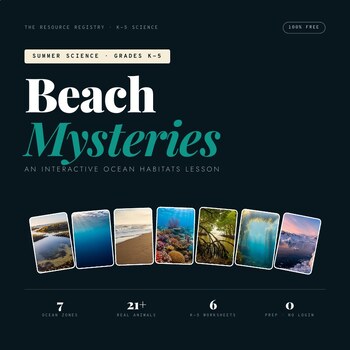
Few science topics sell themselves like the ocean. Anglerfish, coral reefs, the crushing dark of the deep sea — K–5 students are hooked before you say a word. The challenge isn't interest; it's turning that interest into a real lesson without spending your weekend assembling slides, hunting for kid-safe videos, and copying worksheets that may or may not match what you taught.
Why "interactive" beats a slideshow
A static slideshow makes students watch. An interactive lesson makes them do. When a class clicks through ocean zones themselves — sunlit surface, twilight, midnight — predicting what lives where and revealing the answer, they're making and testing hypotheses instead of copying notes. That's the difference between a topic they saw and a topic they understand. It also keeps a wide K–5 range engaged at once: little ones love the reveals, older students dig into the "why."
Engagement in science isn't about flashier media. It's about who's doing the thinking — the screen, or the student.
What to cover in an ocean habitats unit
Ocean zones and light. Why life changes as sunlight fades with depth — the single most powerful organizing idea for the whole ocean.
Adaptations. How animals survive pressure, cold, and darkness. Bioluminescence alone will carry a whole lesson.
Food webs. Who eats whom, from plankton up — a natural bridge to energy-flow standards.
Humans and the ocean. Simple, age-appropriate conservation — plastic, reefs, why it matters — gives the unit a real-world payoff.
Wrap each idea in a predict-then-reveal move and even kindergarteners will reason about cause and effect.
Keeping prep near zero
Project, don't install. A browser-based lesson runs on whatever board you already have — no app, no student logins, no accounts to manage.
Match worksheets to the lesson. The print pages should follow the same sequence you just taught, differentiated across K–5, so the follow-up reinforces the exact ideas instead of drifting.
Try before you commit. A free sample lets you run the whole thing once and see how your class responds before building a unit around it.
A lesson you can run today
Our free Ocean Habitats interactive lesson is exactly this: a browser-based, click-through lesson with marine worksheets, no login and no prep, built for K–5. It's part of our Explore & Learn science line — the same predict-clue-reveal format we use for Animal Habitats, the Human Body, Weather, and Space. Project it, let students drive, print the pages, done.
The bottom line
The ocean does the motivating for you. Your job is to channel that curiosity into real reasoning — zones, adaptations, food webs — without drowning in prep. An interactive lesson plus matched worksheets gets you there in the time it takes to open a browser tab.
The Explore & Learn interactive lessons are original products from The Resource Registry.