Sight Words for K–1: What They Are and How to Teach Them Without Losing Your Mind
A practical guide to sight words for kindergarten and first grade. Why they matter, how to teach them, and the routine that actually sticks.
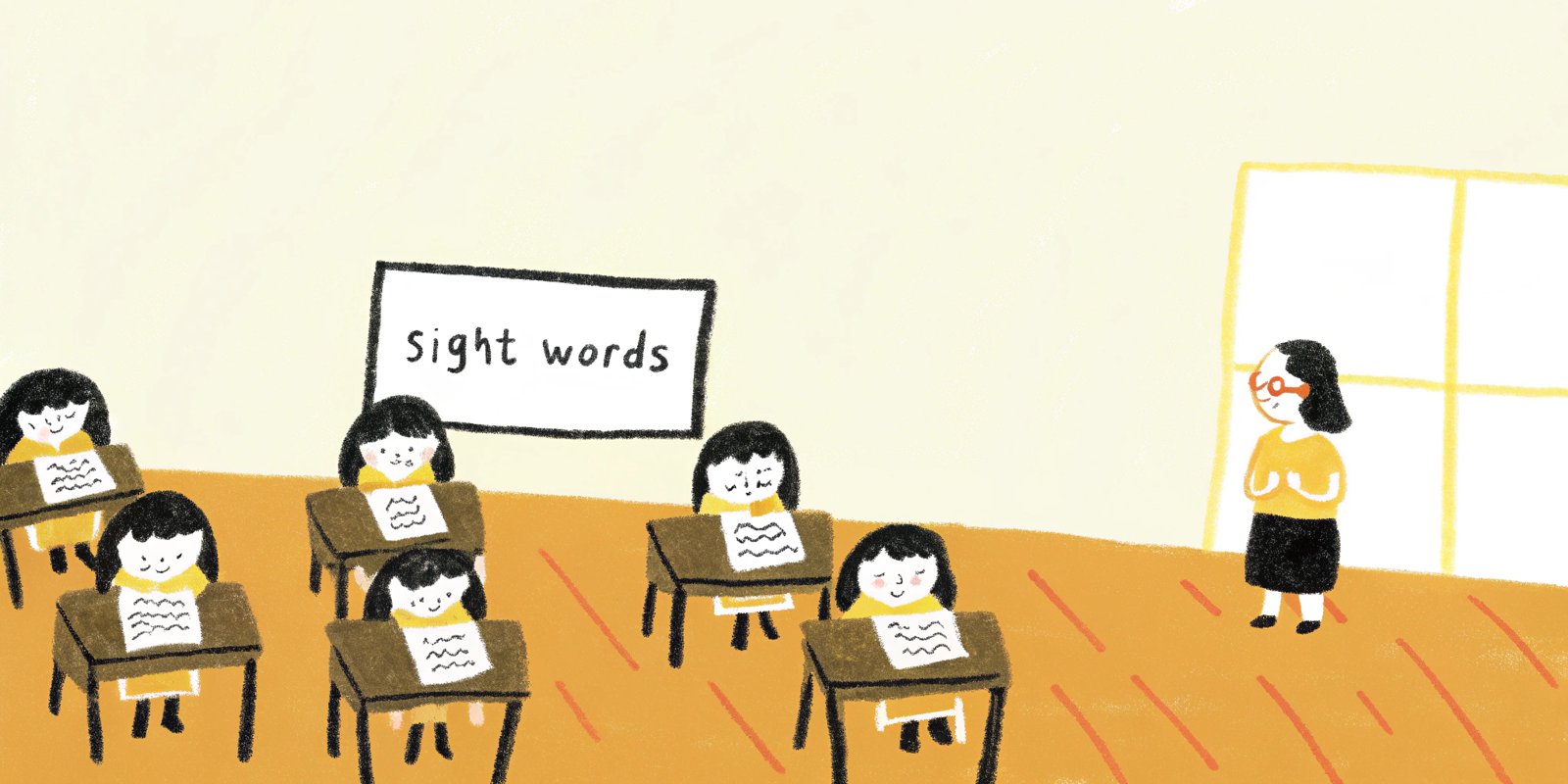
Some words just don't play by the rules. They can't be sounded out neatly using phonics, and they pop up so often in reading that children need to recognise them instantly — by sight — without stopping to decode every time.
That's what sight words are. And whether you're a teacher, a TA, or a parent trying to support reading at home, understanding how to teach them can make a huge difference to a child's confidence and fluency.
The boring part isn't the problem. The boring part is the method. Same five words, same five minutes, every day for a week.
What Exactly Are Sight Words?
Sight words are high-frequency words that appear again and again in everyday reading and writing. Words like the, is, was, said, have, come, where, they, what, were.
Some of them follow regular phonics patterns. Others — and this is the tricky part — don't. Try sounding out "said" using phonics rules and you'll end up with something closer to "say-d." Try "was" and you get "wass." These are words children simply need to learn to recognise on sight.
One of the most widely used sight word lists is the Dolch word list, compiled by Edward William Dolch in the 1930s and 40s. It contains 220 of the most common words in children's reading material, grouped by level — from pre-primer all the way through to third grade. Decades later, these words still make up a huge proportion of everyday text. Some estimates suggest that Dolch words account for up to 75% of the words found in typical children's books.
That's why mastering them matters so much. A child who can instantly recognise these words spends less mental energy on the common, glue-like words in a sentence — and more energy on understanding what they're actually reading.
Why Sight Words and Phonics Aren't Enemies
There's sometimes a debate about phonics versus sight words, as if you have to pick a side. You don't.
Phonics gives children the tools to decode words by sounding them out. It's essential, and it works brilliantly for the majority of English words. But English being English, there's a chunk of very common words that don't follow the patterns neatly. That's where sight words come in.
Think of it this way: phonics is the main road, and sight words are the shortcuts. Children need both to get where they're going — fluent, confident reading.
The best approach? Teach phonics systematically and build sight word recognition alongside it. They're not competing strategies. They're partners.
How to Teach Sight Words (What Actually Works)
There's no shortage of opinions on this. Here's what tends to work well in practice:
Repetition, repetition, repetition. Sight words stick through exposure. Children need to see them, read them, write them, and use them — over and over, in different contexts. One flashcard session won't do it. Regular, varied practice will.
Keep sessions short and frequent. Five minutes a day beats thirty minutes once a week. Little and often is the golden rule, especially with younger children whose attention spans are still developing.
Use multiple senses. Reading a word is one thing. Writing it, tracing it with a finger, building it with letter tiles, saying it out loud — all of these create stronger memory pathways. The more ways a child interacts with a word, the more likely it is to stick.
Put words in context. Flashcards are useful, but children also need to see sight words inside actual sentences and books. That's where recognition becomes real reading. When a child spots "they" in a story without pausing, that's the goal.
Don't rush it. Some children pick up sight words quickly. Others need weeks of practice with the same set. Both are normal. Push too fast and you end up with a child who half-knows fifty words instead of truly knowing twenty. Solid foundations first.
Sight Words at Home: Tips for Parents
If you're supporting reading at home, sight words are one of the easiest things to practise — and you don't need anything fancy.
Stick them around the house. Write sight words on sticky notes and put them on the fridge, the bathroom mirror, the bedroom door. Every time your child walks past, they're getting another exposure without even trying.
Play games. Spread word cards on the floor and call them out — your child races to find and grab the right one. Turn it into a treasure hunt. Make it competitive if your child's the type who thrives on that.
Read together and point them out. When you're reading a bedtime story, pause and let your child spot the sight words. "Can you find the word 'was' on this page?" It takes ten seconds and it reinforces recognition in a real reading context.
Write together. Even simple sentences — "I can see the dog" — give children a chance to practise sight words in their own writing. It doesn't need to be neat. It just needs to happen.
Be patient. A child might recognise a word perfectly on Monday and stare at it blankly on Wednesday. That's completely normal. The brain is still forming those connections. Just keep going.
The Worksheet Problem (And a Free Solution)
Whether you're in a classroom or at the kitchen table, there comes a point where you need a worksheet. Something focused. Something the child can work through independently. Something that reinforces the words they're learning that week.
The problem? Finding good sight word worksheets is surprisingly frustrating.
You download something free and it covers the wrong words. Or the layout is cluttered and confusing. Or it's the same format every time and the child is bored of it. Or you need to practise a specific set of Dolch words and can't find anything that matches.
We got tired of this problem, so we built something to fix it.
The Free Sight Words Worksheets Generator covers 80 Dolch words and generates unlimited worksheets that you can print and use straight away.
That means:
Fresh worksheets every time — no more recycling the same pages week after week
Targeted practice — focus on the specific words a child is working on
No prep headaches — generate, print, done
Works in classrooms and at home — whether you're a teacher differentiating for a whole class or a parent practising five words at the kitchen table
It's completely free. No catch, no paywall hiding behind the preview.
👉 Get the Free Sight Words Worksheets Generator here
How to Use the Generator
A few ideas to get you started:
Weekly word sets. Introduce five new sight words on Monday. Generate a worksheet for those words and use it for daily practice through the week. By Friday, assess which ones have stuck and which need to roll over to the following week.
Homework that actually helps. Send home a targeted worksheet so parents know exactly which words their child is working on. No guesswork, no miscommunication between school and home.
Intervention and catch-up. Working with a child who's behind on their sight words? Generate worksheets focused on the specific words they're struggling with. It's instant differentiation.
Morning work or early finishers. Print a batch and keep them in a tray. Quick, independent, and purposeful.
Summer and holiday practice. Parents can generate worksheets at home to keep skills ticking over during breaks — without buying workbooks or hunting for resources online.
The Bottom Line
Sight words are one of those things that seem simple — until you're trying to teach them to a child who keeps confusing "where" and "were" for the fourteenth time this week.
But here's what matters: every bit of practice counts. Every sticky note on the fridge, every worksheet completed, every time a child reads "the" without hesitating — it's all building towards fluent reading.
And fluent reading changes everything.