AAC Communication Boards: What They Are, Why They Work, How to Start
A practical introduction to AAC communication boards for early communicators. What they are, why real photos beat clip art, and how to start using them.
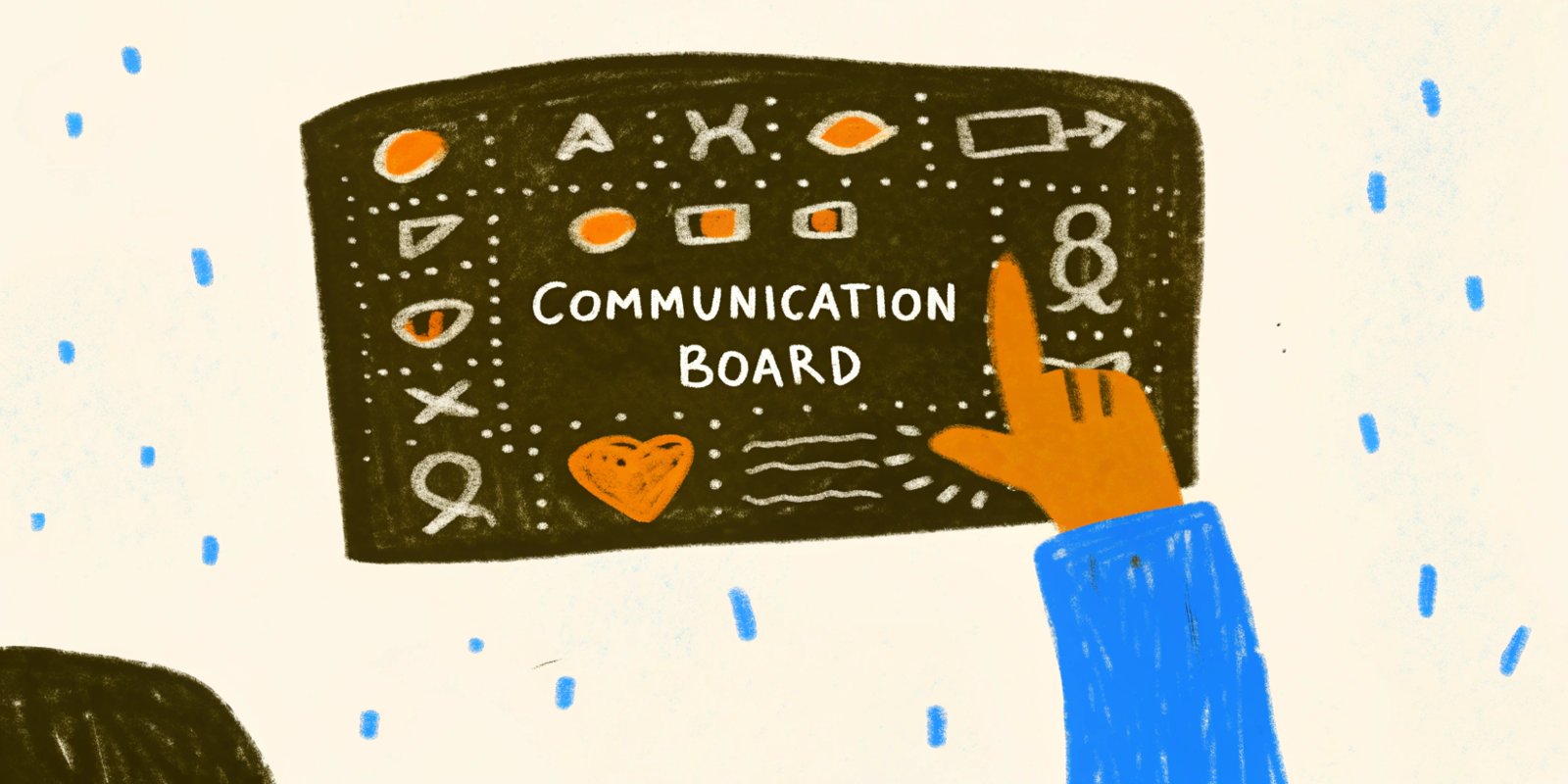
Whether you're new to AAC (Augmentative and Alternative Communication) or you've been using visual supports for years, it's worth stepping back and thinking about why communication boards are so powerful, when to reach for one, and how to use them effectively.
Clip-art symbols teach a child to recognize a cartoon. Real photos teach them to recognize their world.
Plus, we've got two free resources at the end to help you get started straight away.
Communication Boards: What They Are, Why They Work, and How to Get Started
You've probably seen them pinned to lanyards, stuck to tables, or tucked inside book bags — but are you getting the most out of communication boards?
Whether you're new to AAC (Augmentative and Alternative Communication) or you've been using visual supports for years, it's worth stepping back and thinking about why communication boards are so powerful, when to reach for one, and how to use them effectively.
Plus, we've got two free resources at the end to help you get started straight away.
Why Use a Communication Board?
We talk a lot in education about giving every child a voice. But for some children, that voice doesn't come through words — at least not yet. And that's completely okay.
Communication boards give children a way to express themselves without relying on speech. They can point, tap, glance, or reach towards an image to tell you what they want, how they feel, or what they'd like to happen next.
But here's what a lot of people miss: communication boards aren't just for non-verbal children. They're brilliant for children who have some speech but lose their words when they're anxious or overwhelmed. For children with autism who understand far more than they can express. For EAL learners who need a visual anchor while they're finding their feet with English. For children who are simply shy and need a low-pressure way in.
When you put a communication board in front of a child, you're not saying "you can't talk." You're saying "there are lots of ways to communicate, and all of them count."
That's a message every child deserves to hear.
When Should You Use One?
The short answer? As often as possible.
It's tempting to save communication boards for dedicated speech and language sessions — get them out for 15 minutes, work through some targets, then pack them away. But communication doesn't happen in neat little slots. It happens all day, in messy, unplanned, beautiful little moments. And that's exactly where communication boards belong.
Think about your day. Where does communication naturally happen?
During circle time and singing — song boards are absolute gold for this. During snack time — requesting, choosing, commenting ("yummy," "more," "all done"). During play — making choices, labelling, taking turns. During transitions — "first... then..." boards that take the anxiety out of what's coming next.
The more you weave communication boards into everyday routines, the more natural they become — for you and for the child.
And here's the single most important piece of advice I can give you: model, model, model. Don't hand the board to a child and wait for them to figure it out. Use it yourself. Point to the symbols as you talk. Show them what it looks like when someone communicates this way.
This is called aided language input, and it's the thing that makes the biggest difference. When a child sees you using the board — comfortably, naturally, without making a big deal of it — they learn that this is just another way people communicate. No fuss. No pressure.
How to Use a Communication Board (Without Overthinking It)
If you've never used one before, it can feel a bit daunting. You might worry you're doing it wrong, or that you'll overwhelm the child, or that nothing will happen and you'll wonder what the point was.
Take a breath. You've got this. Here's how to keep it simple:
Start with something the child already loves. If they light up during song time, start there. If snack is the highlight of their day, start there. You want the activity to do the heavy lifting so the communication board just slots in naturally.
Model before you expect anything back. Point to the symbols as you talk. "I want MORE." "Let's GO." You're planting seeds. Some children will start pointing within minutes. Others will watch for weeks before they try. Both are completely normal.
Don't overload the board. A board with 40 symbols might look impressive, but for a child who's just starting out, it's overwhelming. Start small — a few core words — and build up as their confidence grows.
Get comfortable with silence. After you model, pause. Wait. Count to ten in your head if you need to. The silence feels awkward — but that quiet space is where children process, plan, and find the courage to try.
Celebrate everything. A glance towards the board? That counts. A hand reaching in the general direction of a symbol? That counts. A full-on deliberate point? Brilliant. Respond to every attempt as if it's communication, because it is.
Why Real Photos Make a Difference
This is something we feel really strongly about.
Most communication boards use cartoon-style symbols, and they absolutely have their place — especially for children who are already familiar with symbol systems. But for a lot of learners, particularly those with autism or significant learning needs, real photographs are easier to understand.
Think about it from a child's perspective. A cartoon-style symbol is an abstract representation of something real. The child has to work out that this simplified drawing represents an actual thing in the actual world. That's an extra cognitive step. And for children who already find communication challenging, that extra step can be the thing that puts them off.
A real photo of a bus looks like the bus they ride to school. A real photo of a cow looks like the cow in the farm book they love. There's no translation needed — they see it and they know.
Real photos are also more visually distinct from each other, more engaging for young eyes, and — crucially — they build connections to the real world. When a child can look at their board and recognise things from their actual life, communication stops being an exercise and starts being something meaningful.
That's exactly why every resource we create uses real photographs rather than clip art or cartoon images. We want children to look at their communication board and see their world looking back at them.
Two Free Resources to Get You Started
Right, enough talking — let's get practical.
We've put together two free communication boards that you can download, print, and use straightaway. Both use real photographs, both are designed for songs you're probably already singing, and both are a great way to see this approach in action.
🚜 Old MacDonald Had a Farm
A circle time favourite! This board includes real photos of farm animals so children can join in, make choices ("which animal next?"), and participate in a song they already know and love. It works beautifully in circle time, small groups, or one-to-one — just sing, point, pause, and let the child choose what comes next. And here's the best bit: it's fully customizable. You can swap out the animal photos for different ones, add a child's favourite animals to make it more personal, and even edit the animal names. Want to expand vocabulary beyond farm animals? Go for it. This board grows with the child.
👉 [Download your free Old MacDonald Had a Farm Communication Board here]
🚌 Wheels on the Bus
Another much-loved song, set up so children can make choices, join in with the actions, and engage throughout. The real photos help children connect what they see on the board with what they're doing with their bodies — wipers swishing, wheels turning, doors opening and closing. Like the Old MacDonald board, the photos are fully customizable — parents can even replace the mum and dad images with photos of themselves, making it instantly more meaningful and personal for their child.
Both boards are completely free. No catch, no sign-up wall — just download, customise if you want to, and go. Think of them as a taster of how real-photo communication boards can work in your setting.
👉 [Download your free Wheels on the Bus here]
Ready for More?
If you find these useful — and we hope you will — you'll find plenty more in our TPT store. We're building a whole library of real-photo communication boards, visual supports, and SEN resources, all designed by someone who knows what it's actually like to work in a busy classroom with children who need things to be clear, simple, and real.